
Virtual Office vs. Coworking Space in Manhattan: The Decision Guide
 07.02.2026
If you are choosing between a virtual office and a coworking space in Manhattan, the decision is simpler than it looks. A virtual office gives your business a real Manhattan address and professional admin services without a physical desk. A coworking space gives you an actual place to work every day. These two things solve different problems, and which one you need depends on one core question: does your business require you to be physically present in Manhattan on a regular basis, or does it require Manhattan to be on your business card?
This guide skips the feature lists and goes straight to the question that actually matters: which one fits how your business operates?
WorkBetter operates both a virtual office program and coworking memberships at 33 W 19th Street in the Chelsea and Flatiron neighborhood of Manhattan, and we see this decision play out regularly. This is what we have learned about who chooses what, and why.
TL;DR:
- A virtual office is a business presence service. You get a Manhattan business address, mail handling, and phone answering, but no desk. You work from wherever you normally work.
- A coworking space is a physical workspace service. You pay for access to a professional workspace in a real building, by the day, month, or year.
- Across the Manhattan market, virtual office services are generally the lower-cost option. Market data from CoworkingResources shows NYC hot desk memberships commonly ranging from around $200 to $450 per month, and dedicated desks from $350 to $700 per month across providers. Virtual office plans typically run well below those figures. These are typical market ranges, not WorkBetter-specific rates. For current WorkBetter pricing, visit workbetternyc.com.
- The decision comes down to this: if you need your business to exist in Manhattan, choose a virtual office. If you need yourself to exist in Manhattan on most workdays, choose coworking.
- Many WorkBetter members use both. The virtual office handles their address and mail. Coworking or day office access handles the days they need to physically show up.
Virtual Office vs Coworking: What Each Option Actually Is
A virtual office is not a physical space you occupy. It is a bundle of business services tied to a real commercial address. At WorkBetter, a virtual office member gets a 33 W 19th Street Manhattan address for mail, business correspondence, and professional identity; mail and package receipt with forwarding; a local phone number with live answering or voicemail; and the option to book meeting rooms or day offices when they need to show up in person. The address is real. The building is real. The member, however, works from home, from another city, or from wherever they work best.
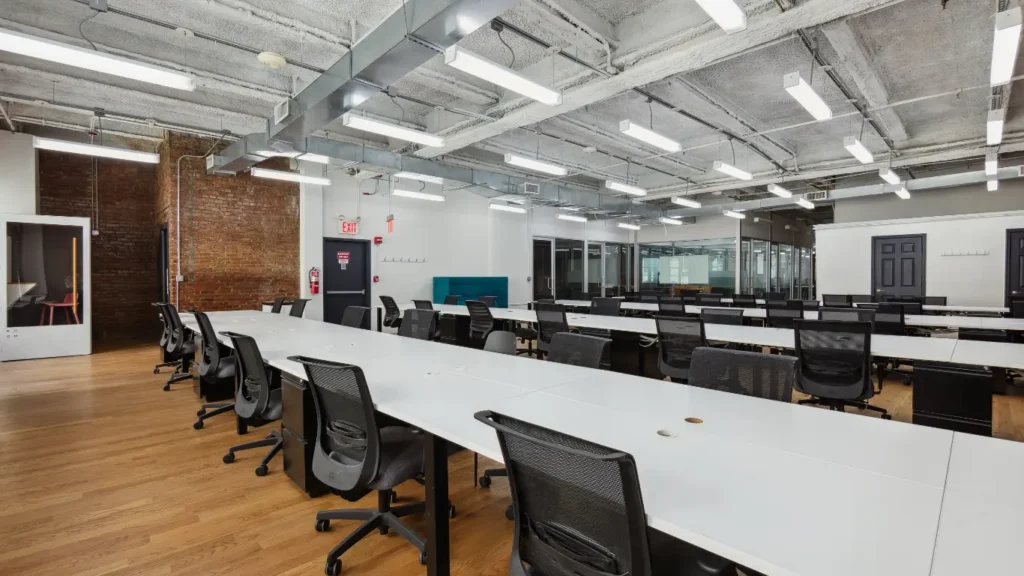
A coworking space is the building itself. You pay for access to a professional work environment: a desk, a private office, or a shared workspace inside a managed building with internet, printing, meeting rooms, kitchen, and reception included. At WorkBetter, coworking members work in a professionally designed environment in Chelsea and Flatiron, with access to private phone booths, conference rooms, and shared common areas. You show up. You work and leave. No long-term lease. No facilities to manage.
The simplest way to tell them apart: a virtual office puts Manhattan on your business card. A coworking space puts you in Manhattan. Both are legitimate needs. They are just different ones.

The Direct Comparison: What Each One Gives You
Cost
Virtual office plans are consistently the lower-cost option across the Manhattan market when daily physical presence is not what you need. For context, market data from CoworkingResources indicates that hot desk coworking memberships in New York City commonly fall in the range of $200 to $450 per month across providers, and dedicated desks from $350 to $700 per month, depending on the building, neighborhood, and included amenities. Virtual office services typically run well below those figures because you are paying for services and a commercial address, not square footage. These are typical market ranges drawn from published third-party data. For WorkBetter’s current pricing on both options, visit workbetternyc.com.
Rates reflect the Chelsea and Flatiron location, the specific services included in each plan, and any current availability. Confirm live pricing before making a decision, as market rates in Manhattan shift with demand.
A useful rule of thumb: estimate how many days per month you realistically need to be in a physical office. If that number is low, virtual office services paired with on-demand day office bookings will typically cost less than a monthly coworking membership. If you are in the building most workdays, a membership tends to save money over daily rates. The exact crossover point depends on your provider’s day rate and membership fee, so run the numbers with WorkBetter’s current pricing before deciding.
What You Get for Client-Facing Work
Both options improve your professional appearance compared to using a home address, but they do it at different moments in the client relationship. A virtual office does its work before the client ever meets you. Your 33 W 19th Street address on your website, your email signature, and your business registration signals that you are an established Manhattan operation. The phone is answered professionally. The correspondence arrives at a real building.
A coworking space does its work when the client walks in the door. A professional reception area, a well-furnished conference room, and a building that looks and functions like a real office all communicate credibility during in-person meetings and presentations. If you regularly host clients, this matters. A hot desk in an open coworking floor is not the right room for a contract negotiation or a first client presentation. WorkBetter members who host clients regularly book private meeting rooms for those visits, available by the hour to both virtual office members and coworking members.
Audit how often clients actually visit you versus how often they simply look you up online or receive your correspondence. If client visits are rare, a virtual office handles the credibility question at a lower ongoing cost. If clients come to you weekly, a coworking membership with regular meeting room access is the more practical structure.

What You Get for Daily Work
A virtual office does not give you a place to work. That is not a flaw; it is the point. It is designed for professionals who already have a productive work environment and need Manhattan to represent their business, not to be their daily commute. Freelancers who work from home, remote-first teams spread across time zones, consultants who work at client sites, and companies entering the New York market from elsewhere are all natural virtual office users. The address gives them credibility. The admin services handle their business presence. The work itself happens wherever they already work well.
A coworking space is for people who need a real place to work on most days. New York City apartments are notably small by national standards, which makes sustained professional focus difficult for many residents working from home. Professionals who benefit most from coworking include those who work better outside the home, those whose clients or collaborators visit them regularly, those who need reliable office infrastructure without owning or managing it, and those building a local professional network in Manhattan.
Commitment and Flexibility
Both options at WorkBetter are available without long-term lease commitments. A virtual office membership can start and end with short notice. Coworking memberships offer month-to-month terms after an initial period. Neither requires the multi-year lease commitment of traditional Manhattan office space, nor the upfront build-out and furnishing costs that a direct commercial lease entails. This flexibility applies equally to both options and is one of the primary reasons professionals and businesses choose WorkBetter over a conventional office arrangement.
Who Chooses Which Option, and Why
The Virtual Office Is the Right Choice When:
Your work does not require a fixed physical location in Manhattan, but your business does. This is the most common scenario among WorkBetter virtual office members. A consultant based in New Jersey who bills New York clients wants a Manhattan address on their invoices and website. A remote-first startup with a distributed team needs a real commercial address for formation documents and banking. An international company entering the U.S. market needs a credible New York address before committing to physical space. A therapist or licensed professional working from a home office needs a business address that protects their home privacy and meets professional presentation requirements.
In all of these cases, the virtual office does the specific job that needs doing. It does not try to replace a daily workspace because that is not the problem it is solving. If you need to meet a client or host a team session, you book a meeting room or day office at WorkBetter on the days that actually require it. The rest of the time, you work from wherever you already work.
Based on the experience of WorkBetter members who combine a virtual office with occasional day office or meeting room bookings, total monthly costs vary depending on how often physical space is used. For a realistic estimate based on your planned usage, speak with WorkBetter directly or review current plan options at workbetternyc.com.
Coworking Is the Right Choice When:
Your work requires you to be in a professional environment on most days, or your business requires regular in-person presence for clients, collaborators, or your own productivity. This applies to solo professionals who find home working unproductive, small teams of 2 to 5 people who collaborate daily, professionals whose clients visit regularly, and anyone building a business in New York who needs the discipline and environment of a real office without a traditional lease.
Chelsea and Flatiron are strong neighborhoods for coworking because of transit access. Multiple subway lines serve the area, Penn Station is within walking distance for New Jersey commuters, and the neighborhood sits between residential areas in Brooklyn, Queens, and lower Manhattan where many members live. The commute from the outer boroughs is manageable in a way that offices deep in Midtown often are not.
The right test for whether you need coworking versus a virtual office: on the days you are not in a scheduled client meeting or a planned collaboration session, do you still need to leave home to do your best work? If yes, a coworking membership makes sense. If you work well remotely and need Manhattan for specific occasions only, a virtual office with on-demand access covers those occasions more efficiently.
The Combined Approach, When Both Apply
A significant share of WorkBetter members use both. This is not a compromise; it is often the most financially sensible structure for professionals who need a permanent Manhattan presence but do not need to be in the building every day. The typical setup: a virtual office membership provides the 33 W 19th Street address for all business correspondence and client-facing use. Day office or hot desk access covers the specific days the member needs to work in person, meet clients, or run team sessions.
This combined model works well for consultants who come in for client meetings but work remotely on most days; remote-first teams who gather in person monthly or quarterly; solo business owners who want a permanent address but whose work is mobile; and professionals in fields such as therapy or law who see clients on a scheduled basis rather than daily and need a business address separate from their home.
4 Questions Most Comparisons Do Not Answer
Can a virtual office address be used when forming a business in New York?
In many cases, businesses use a commercial address, including some virtual office addresses, when forming an LLC or corporation, as long as it is a real street address where mail can reliably be received. New York LLCs must list addresses as required by the Department of State, and many businesses choose to use a commercial office or virtual office address to avoid putting their home address on public record. Requirements vary by whether the address is being used as the principal office, mailing address, or service-of-process address, and these terms mean different things in New York formation documents.
If you are in a licensed profession such as law, healthcare, or financial services, note that city or licensing rules may impose additional requirements beyond state filing rules, so confirm specifics with your attorney or a qualified formation service before relying on any address for formal filings. WorkBetter staff can confirm what the 33 W 19th Street address provides as a physical commercial location; your attorney or formation service determines how it fits your specific filing and entity type.
If you are forming a business entity in New York and plan to use a commercial or virtual office address, confirm the specific requirements with your attorney or a qualified formation service before filing. The rules differ by entity type, address purpose, and in some cases by profession or license category.

What does a coworking membership actually cost all-in?
The advertised monthly rate is rarely the full number. Coworking memberships frequently carry add-on costs that are not obvious upfront: meeting room hours beyond your monthly credit, printing charges, guest day passes when you bring someone in, after-hours access fees, and parking or storage. When comparing plans at any provider, ask specifically for the all-in monthly cost based on how you actually plan to use the space. Ask what is included in the base rate and what triggers a separate charge. That total is more useful for comparison than the headline price.
A useful question to ask any coworking provider: what does a typical member at this membership level actually spend per month, including all usage-based fees? The gap between the advertised rate and the real monthly cost is often meaningful, particularly for members who use meeting rooms regularly.
Does a virtual office address hold up with enterprise or institutional clients?
For most professional service businesses, a commercial Manhattan address at a known building is sufficient. Clients care about whether you are credible and reachable, not whether you personally occupy a desk at that address. The 33 W 19th Street address is a real building in a well-established Manhattan neighborhood, and it reads as a legitimate business location on correspondence, websites, and professional profiles.
However, some enterprise procurement departments or regulated institutional clients may require verification of physical occupancy as part of vendor qualification. If your client base includes large enterprises with formal vendor onboarding processes, confirm with your client contact whether their procurement team requires proof of physical office presence before you commit to a virtual-only plan. Most do not, but it is worth verifying before it becomes an issue.
How do meeting rooms fit into each option?
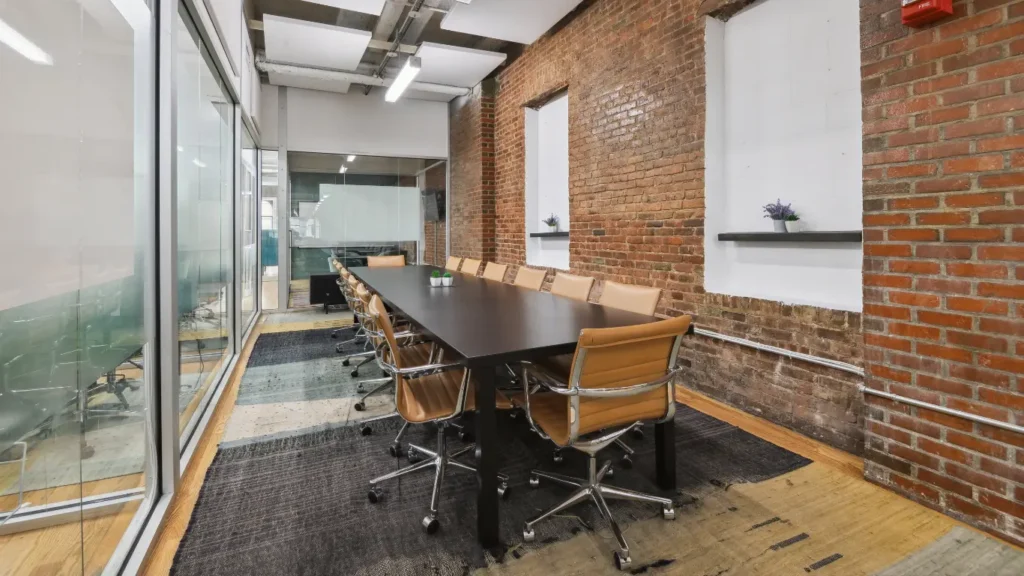
Meeting room access is available to both virtual office members and coworking members at WorkBetter, which removes one of the most common objections to virtual office plans. Virtual office members can book private conference rooms and day offices by the hour or day when they need in-person space. Coworking members receive a monthly credit of included meeting room hours, with additional time available at an hourly rate. The practical implication is that a virtual office member who hosts two or three client meetings per month can do so in a professional private room without maintaining a full coworking membership. They pay for the room on the days it is needed, and the virtual office covers everything in between.
Frequently Asked Questions
Both do, but at different moments. A virtual office covers the expectation before you meet in person: your address, your phone, and your written correspondence all show a Manhattan business. A coworking space covers the expectation when your client walks in the door. If your clients visit you regularly, a coworking membership with meeting room access is the stronger choice. If clients mostly interact with you by email, phone, or video, a virtual office handles that expectation at lower ongoing cost. WorkBetter members who host clients frequently often start with a virtual office and add a coworking membership once client visit volume justifies it.
A virtual office membership plus day office or hot desk access on the specific days you need to be in the building. This is one of the most common setups among WorkBetter members. Your business address stays fixed at 33 W 19th Street. Your mail is handled. On the days you come in, you book a desk or a private office for that day. For a realistic sense of what this costs based on your intended usage pattern, review current plan options at workbetternyc.com or speak with the WorkBetter team directly.
Start with a virtual office plan and add physical access as you need it. This is the lower-risk entry point. You establish your Manhattan address and business presence immediately. You learn what your actual in-person needs are over the first few months. If you find yourself booking the physical space two to three times per week consistently, that is the signal to evaluate a coworking membership. If your in-person needs stay light, the virtual office plus occasional bookings continues to cover you. WorkBetter makes it straightforward to add or upgrade services as your usage patterns become clear.
A virtual office plan covers the business address, not individual people, so a single plan covers all members of a company for address and mail purposes. Coworking memberships are typically structured per person, though a private office membership covers the people assigned to that office. If you have a small team of 2 or 3 people, a private office membership at WorkBetter is often more cost-effective than individual dedicated desk memberships, and it gives the team a contained space with more privacy than scattered desks in an open floor.
Both arrangements at WorkBetter are designed to expand with your business. A virtual office member can add a dedicated desk or private office as in-person needs grow. A coworking member can move from a hot desk to a dedicated desk to a private office within the same building. For larger teams, WorkBetter also offers team suites and enterprise arrangements. The point of flexible workspace is that you should never be paying for more than your current business requires, and you should never be limited by your current plan when you genuinely need more.

Address or Workspace? Here Is How to Decide.
Virtual office or coworking comes down to one honest question: does your business require you to be in a physical Manhattan workspace on most workdays, or does it require Manhattan to represent your business in the market?
If the answer is the former, a coworking membership at WorkBetter gives you a professional daily environment with no long-term lease, at 33 W 19th Street on the Chelsea and Flatiron border. If the answer is the latter, a virtual office at that same address gives you that representation at a lower ongoing cost, with physical space available when you actually need it.
Both options exist at WorkBetter under one roof, which means you can start with one, add the other, or use them together without managing multiple providers or addresses. Visit workbetternyc.com to see current plans and availability, or schedule a tour to see the space before you decide.
Discover a Better Way to Work
If you are interested in learning more about WorkBetter or exploring our membership options, we invite you to book a tour of our space today
Book A Tour
Flexible, hospitality-inspired office space solutions for modern organizations.
Subscribe to receive interesting stories, professional insights, business tips, local profiles, and special offers delivered directly to your inbox.


