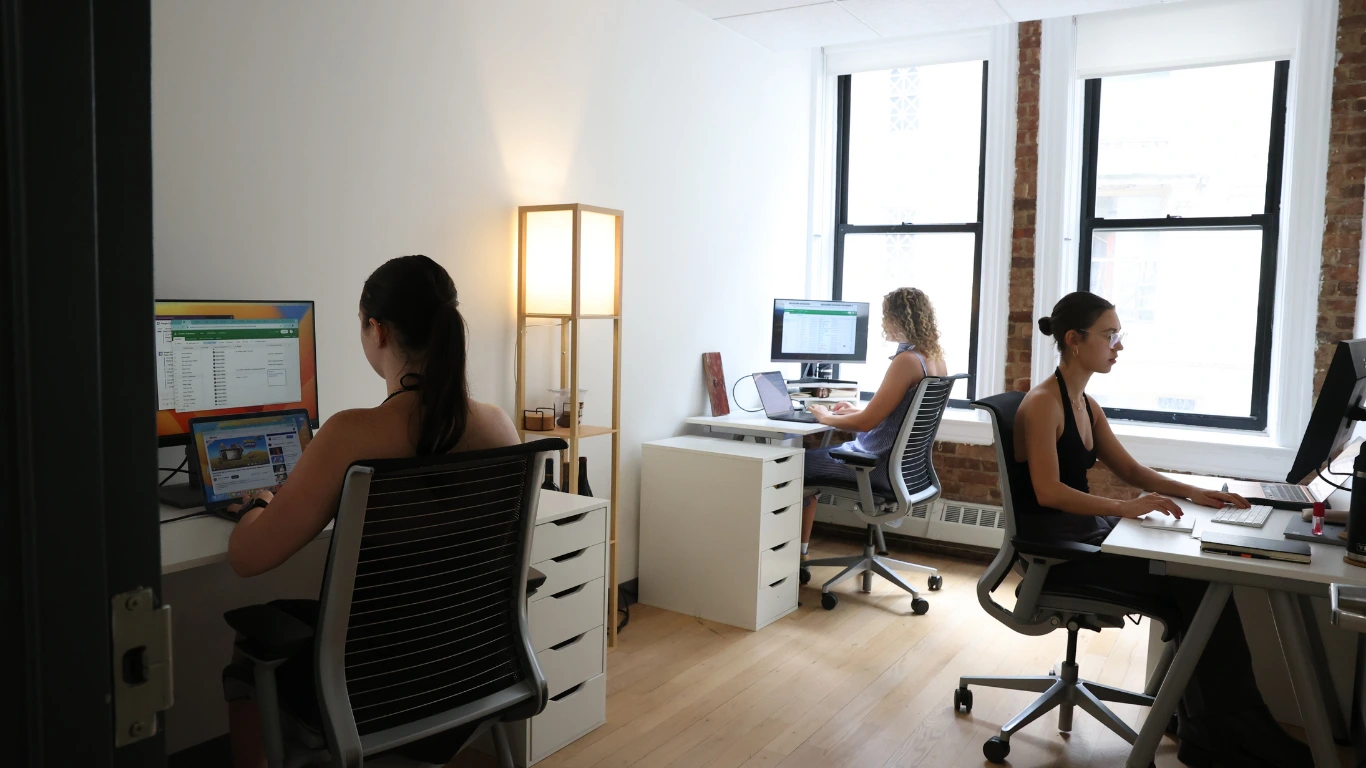
How to Find a Productive Workspace in Manhattan (And Why It Matters More Than You Think)
 04.22.2026
Working in Manhattan is not easy. Space is tight, offices are expensive, and the line between “focused work” and constant distraction is thin. Whether you run a small business, lead a team, or work independently, where you work affects how well you work.
The good news: you have more options than ever. And if you know what to look for, finding a productive workspace in Chelsea or Flatiron does not have to be complicated or expensive.
This guide breaks down what makes a workspace truly productive, what the Manhattan market looks like right now, and how WorkBetter can help you find the right fit.
What “Productive” Actually Means (And Why It Matters)
A productive workspace is not just a desk with fast Wi-Fi. It is an environment where you can focus, think clearly, and get real work done without fighting your surroundings.
Research from the American Society of Interior Designers found that 90% of workers say workspace design directly affects their output. In Manhattan, where a typical office lease runs between $70 and $150 per square foot per year, getting the environment right is not optional. It is a business decision.
Here is what separates a workspace that works from one that does not:
- You can concentrate without constant interruption
- The physical setup supports you, not the other way around
- Technology works reliably every single time
- You feel like a professional, even on your hardest days
- The space grows with your needs
The Core Elements of a Productive Work Environment
Ergonomics: Your Body Needs to Work Before Your Mind Can
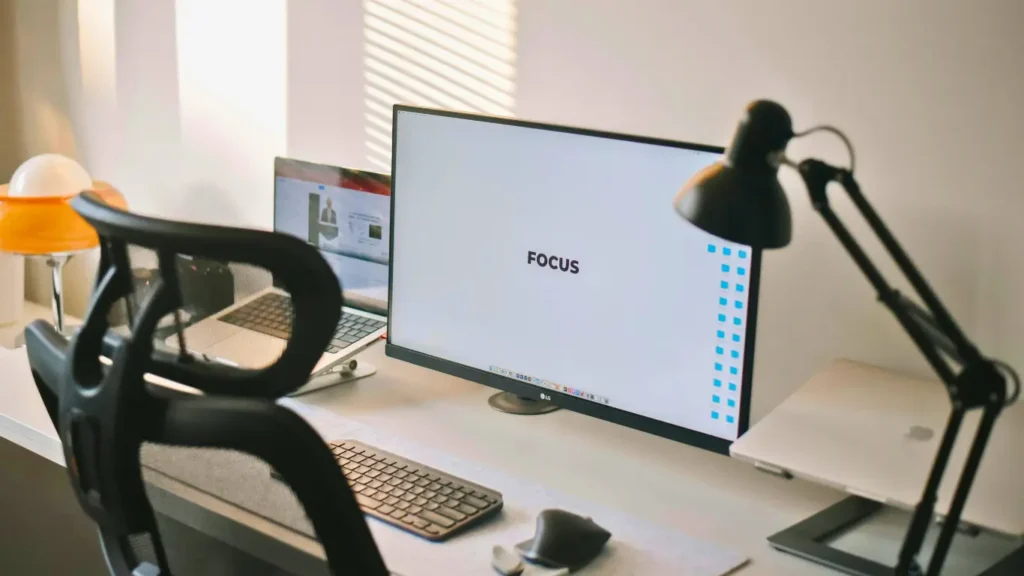
Ergonomics is the science of fitting your workspace to your body. In plain terms: if your chair is the wrong height or your monitor forces you to hunch, you will feel it by 2 p.m.
Data from the U.S. Bureau of Labor Statistics show that musculoskeletal disorders (often linked to poor ergonomics) account for about 33% of all nonfatal workplace injury and illness cases in the United States.
But beyond injury, discomfort kills concentration. You cannot focus on a client proposal when your back is tightening up every 20 minutes.
At a minimum, your workspace should include:
- An adjustable chair with lower back support
- A monitor positioned at eye level, roughly 20-28 inches away from your face
- A keyboard and mouse that allow your wrists to stay flat and neutral
- A sit-stand desk option for longer work sessions.
WorkBetter spaces are set up with ergonomics as a standard, not an upgrade.
Lighting: The Detail Most Workspaces Get Wrong
Lighting affects more than whether you can see your screen. It directly impacts your mood, energy, and ability to stay focused.
Studies from Cornell University found that workers in offices with optimized natural light reported a 63% drop in headaches and a 51% reduction in eyestrain, compared with those in poorly lit environments. Meanwhile, a separate study (Northwestern Medicine and University of Illinois) showed that office workers with access to windows slept about 46 minutes longer per night than those without daylight exposure.
For Manhattan workers stuck in basement offices or artificially lit rooms, this is a significant disadvantage.
Look for spaces that offer:
- Direct access to natural window light
- Warm LED overhead lighting as a backup
- Adjustable task lighting at individual desks
- No harsh fluorescent strips that cause eye strain over long sessions
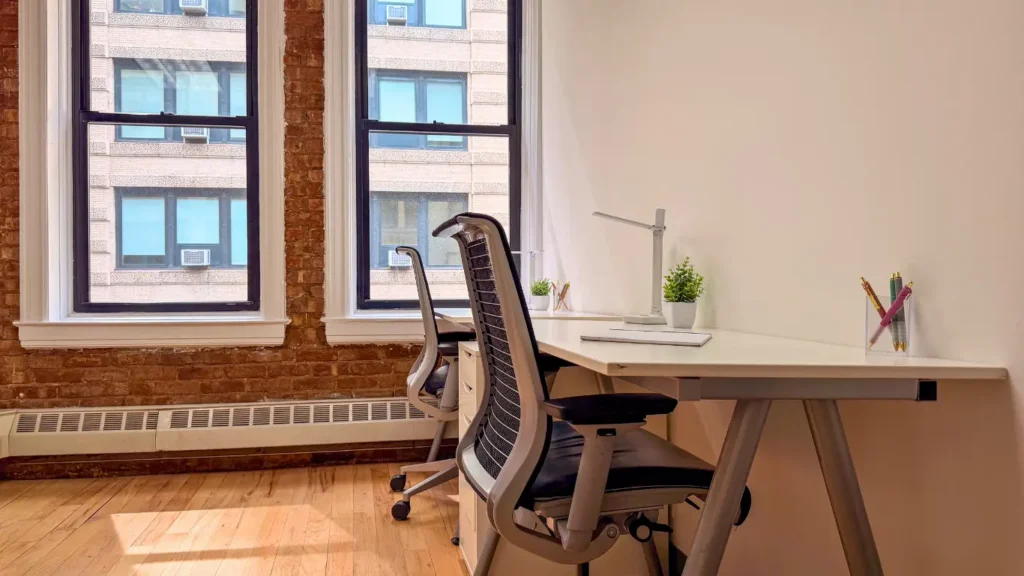
Chelsea and Flatiron buildings, many of which were originally built for showrooms and light-dependent industries, tend to have excellent floor-to-ceiling windows. WorkBetter’s versatile workspaces take full advantage of that.
Acoustic Control: Noise Is a Productivity Killer
Open offices are popular. They are also noisy. A University of California, Irvine study led by Gloria Mark found that, after an interruption, workers took an average of about 23 minutes to return to their original task. In a shared workspace, interruptions do not stop at one.
The solution is not to work in silence. It is to have the right kind of sound environment for the task at hand.
Productive workspaces offer:
- Quiet zones for deep concentration work
- Phone booths or pods for calls and video meetings
- Sound-absorbing materials in open areas to reduce echo
- Private offices when sustained focus is critical
When you book a meeting room or private office at WorkBetter, you are booking a space where sound control was built into the design.

Why Your Office Environment Affects Your Business Results
Biophilic Design: Nature Inside the Office
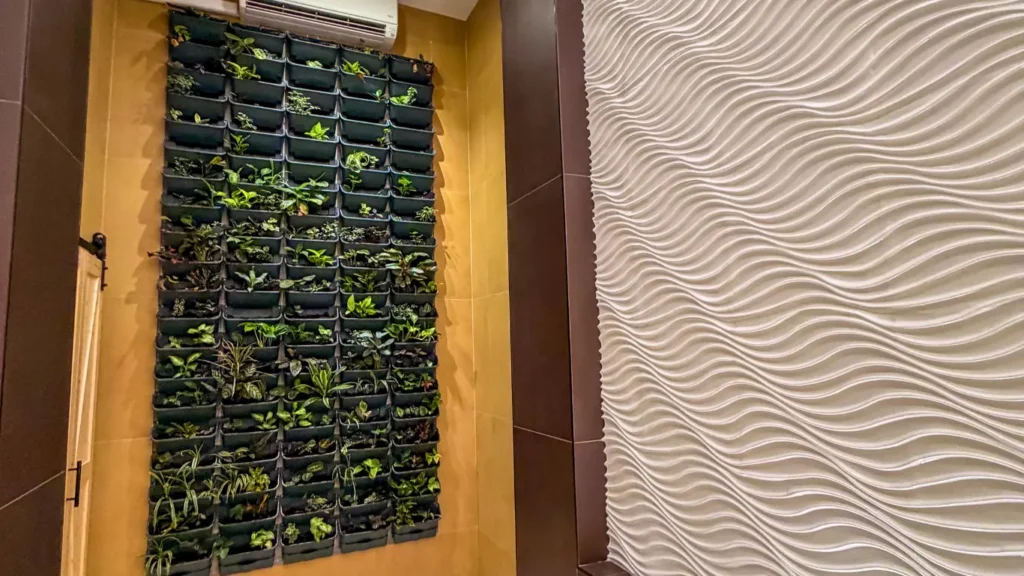
Biophilic design refers to incorporating natural elements into built spaces. This means plants, natural wood surfaces, stone accents, and views of the outdoors. It is not decoration for its own sake.
The Human Spaces Global Impact of Biophilic Design in the Workplace report, commissioned by Interface, found that employees working in offices with natural elements reported a 15% higher level of wellbeing, were 6% more productive, and 15% more creative than those in environments without biophilic features.
In Manhattan, where most workers stare at concrete and glass for 8 or more hours a day, access to greenery and natural materials is not a luxury. It is a practical advantage.
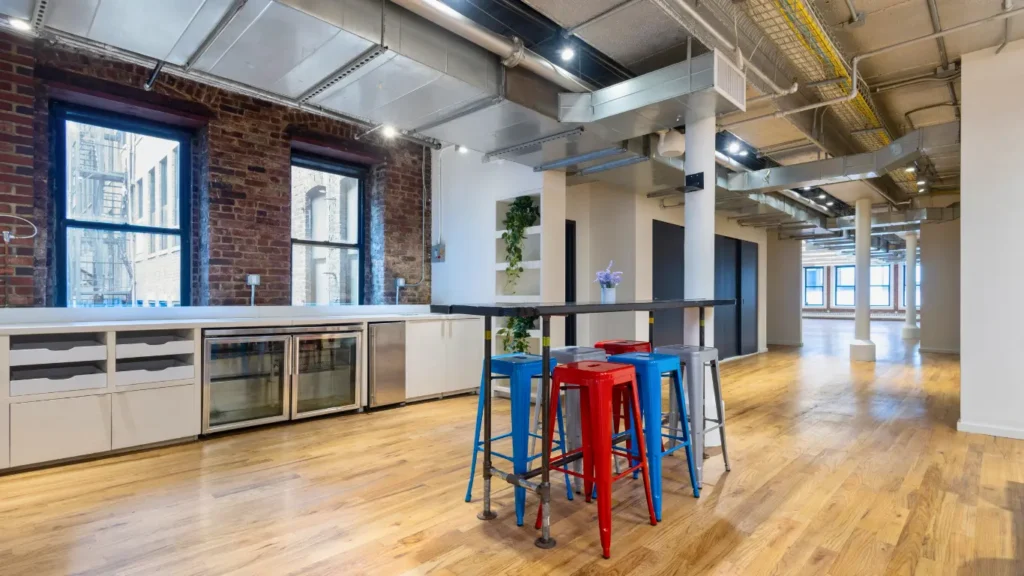
Located between Chelsea and Flatiron, WorkBetter features plant walls, natural materials, and a curated design that keeps the space warm and inviting rather than sterile or institutional.
Flexibility: The Layout Your Team Actually Needs
Not every workday looks the same. Some days you need a private room to close a deal. Other days your team needs a large table for a working session. Most traditional leases do not accommodate that kind of shift.
According to CBRE’s U.S. 2024 Office Outlook, smaller tenants now account for about 60% of office leases by count and are driving growing demand for flexible office formats, including spec suites and shorter commitments. Newmark’s 3Q 2024 Manhattan report shows that Midtown South (home to Chelsea and Flatiron) has seen leasing activity improve and availability decline for three consecutive quarters, signaling renewed tenant interest in well‑located, amenity‑rich space.
Flexible layouts allow you to:
- Book private offices by the day or month, not by the year
- Reserve meeting rooms for hours at a time or a full day
- Scale your footprint up or down without breaking a lease
- Give remote team members a professional home base on the days they come in
WorkBetter is built around this kind of flexibility. You are not locked in. You choose what you need, when you need it.
Manhattan’s Workspace Landscape: Chelsea and Flatiron
Chelsea: A Hub for Creative and Tech-Focused Businesses
Chelsea, roughly spanning West 14th to West 34th Street between the Hudson River and Sixth Avenue, has become one of Manhattan’s most active business neighborhoods. It is home to a mix of tech companies, creative agencies, and independent professionals.
The area’s industrial past means buildings tend to have wide floor plates, tall ceilings, and generous natural light. These are physical qualities that translate directly into better working conditions.
Chelsea coworking spaces at WorkBetter offer:
- Private offices starting at daily and monthly rates
- Meeting rooms with A/V equipment and video conferencing setups
- Wellness rooms for breaks, meditation, or private calls
- High-speed internet with dedicated bandwidth options
- 24-hour access for members who work outside standard hours

Flatiron: Quiet, Central, and Built for Focused Work
Flatiron sits between Chelsea and Midtown, making it one of the most accessible neighborhoods in the city. With easy access to the N, R, W, Q, 4, 5, 6, F, and M subway lines, getting there is rarely the problem.
The neighborhood around Madison Square Park has a distinct character. It is quieter than Midtown, more professional than many parts of Lower Manhattan, and well-suited for client meetings.
For professionals who need to bring clients in or run recurring team meetings, Flatiron offers a setting that communicates credibility without the overhead of a full-time lease.
WorkBetter features dedicated quiet zones, private meeting suites, and open coworking areas with low ambient noise levels, all designed to support the sustained focus client work requires.
The NYC Apartment Problem: Why Working From Home Is Not Enough
Small Space, Big Cost to Your Work
New York City apartments average 733 square feet, according to StreetEasy’s 2024 market data. That is well below the national average of 941 square feet. For many renters, that space includes a bedroom, living area, kitchen, and whatever corner gets called the “home office.”
Working in that environment creates real challenges:
- Background noise from neighbors, traffic, or roommates breaks concentration
- The boundary between work and personal life disappears
- Video calls become difficult to manage without a clean background
- Motivation and professional identity can erode when your “office” is also your couch
This is not a personal failing. It is a physical reality. A 733-square-foot apartment was not designed to function as a professional workspace.
The Professional Workspace as the Practical Solution
For roughly the same cost as a daily coffee habit and lunch in Manhattan, you can have a dedicated desk at a professional workspace. Daily hot desk rates in Chelsea and Flatiron typically range from $35 to $75 per day, depending on amenities and location.
Monthly memberships that include a set number of days per month generally run between $250 and $600, depending on the plan. Compare that to the average Manhattan office lease, which can easily run $5,000 or more per month for even a small private office, and the value becomes clear.
WorkBetter offers transparent pricing with no hidden fees, so you know exactly what you are getting before you commit.
How to Choose the Right Workspace for Your Situation
A Simple Checklist Before You Book
Before you sign up for any coworking membership or book a meeting room, go through this checklist:
- Does the location work for your daily commute or client visit patterns?
- Is there a quiet zone or private option if you take frequent calls?
- Can you book by the day, week, or month without a long-term commitment?
- Does the space include meeting rooms, or is that a separate charge?
- Is the internet connection reliable? Ask about dedicated bandwidth options.
- Are there wellness amenities (or at least nearby) that support longer working days?
- What are the actual hours of access? Some spaces close early on weekends.
- Are printing, mail handling, and business address services included?
Match Your Workspace to Your Work Type
Different work needs different spaces. Here is a practical breakdown:
Deep Focus Work
If your day involves writing, coding, designing, or detailed analysis, you need acoustic control and minimal visual distraction. Choose a quiet zone, private office, or a space with phone booths available for calls.
Client-Facing Work
If you regularly meet clients, your space needs to project professionalism. Look for clean, well-maintained meeting rooms with A/V support, a professional reception or lobby, and a business address you can use on your website.
Team Collaboration
If your team meets regularly, you need flexible room configurations. Look for spaces that offer large tables, writable walls or whiteboards, and tech setups that support both in-person and hybrid participation.
Hybrid Work with Flexible Office Days
If you work in a hybrid setup, mostly remote but in the office 2 to 4 days a week, flexible access makes more sense than a full‑time lease. A day pass or part‑time membership lets you use a professional workspace only on the days you need it, and WorkBetter offers both without locking you into a full‑month commitment upfront.
Frequently Asked Questions
It depends on what you need. A daily hot desk usually runs between $35 and $75. Monthly memberships with part-time access typically start around $250 to $350. Full-time dedicated desks or private offices run higher, generally $600 to $1,500 or more per month. WorkBetter publishes its pricing clearly, and there are no surprise charges. The right question is not just “what does it cost?” but “what does it cost compared to the alternative?” For most Manhattan professionals, a flex membership is significantly cheaper than a traditional lease.
Yes. Many WorkBetter members use the space primarily for client meetings or team sessions, not as a daily desk. You can book meeting rooms by the hour without a membership, or join a membership plan that includes a set number of room hours each month. This works well for consultants, attorneys, financial advisors, and anyone who needs a professional meeting environment without maintaining a full-time office.
A hot desk is a shared workspace where you sit wherever a spot is open each day. It is the most affordable option and works well for people who do not need the same seat every time. A dedicated desk is reserved for you. Your setup stays in place, and no one else uses it. A private office is a fully enclosed room for one person or a small team. It gives you the most control over noise, privacy, and how you present yourself on calls. WorkBetter offers all three at its Chelsea location.
In most cases, yes. Natural light is not cosmetic. It reduces eye strain, supports better sleep cycles, and has measurable effects on mood and energy during the workday. Studies consistently show that workers in well-designed environments with natural light and greenery outperform those in standard setups. In Manhattan, not all spaces offer this. WorkBetter is thoughtfully designed with these factors in mind. The cost difference is usually modest relative to the impact on your daily work quality.
Yes. WorkBetter is built to accommodate mixed teams. You might have two people who need dedicated desks five days a week, a few remote employees who come in twice a month, and a manager who books meeting rooms for weekly team check-ins. All of that can be managed under a single account with different membership tiers for different people. You do not need every team member on the same plan. You build the setup that fits your actual headcount and schedule.
The Practical Path to Better Work in Manhattan
You do not need a big budget or a long-term lease to have a professional, productive workspace in Manhattan. You need the right environment matched to how you actually work.
Chelsea and Flatiron offer some of the best building stock in New York for professional workspace. Good light, accessible locations, and a business community that takes work seriously. WorkBetter was built to give you access to that environment without the overhead of a traditional lease.
If some weeks you just need a quiet desk for a couple of days, other times you want a dedicated office for a month, and every so often you need a polished room to meet clients, WorkBetter lets you book exactly that instead of paying for space you are not using.
Visit workbetternyc.com to see current availability, or schedule a visit to the Manhattan location that fits your commute.
Discover a Better Way to Work
If you are interested in learning more about WorkBetter or exploring our membership options, we invite you to book a tour of our space today
Book A Tour
Flexible, hospitality-inspired office space solutions for modern organizations.
Subscribe to receive interesting stories, professional insights, business tips, local profiles, and special offers delivered directly to your inbox.


