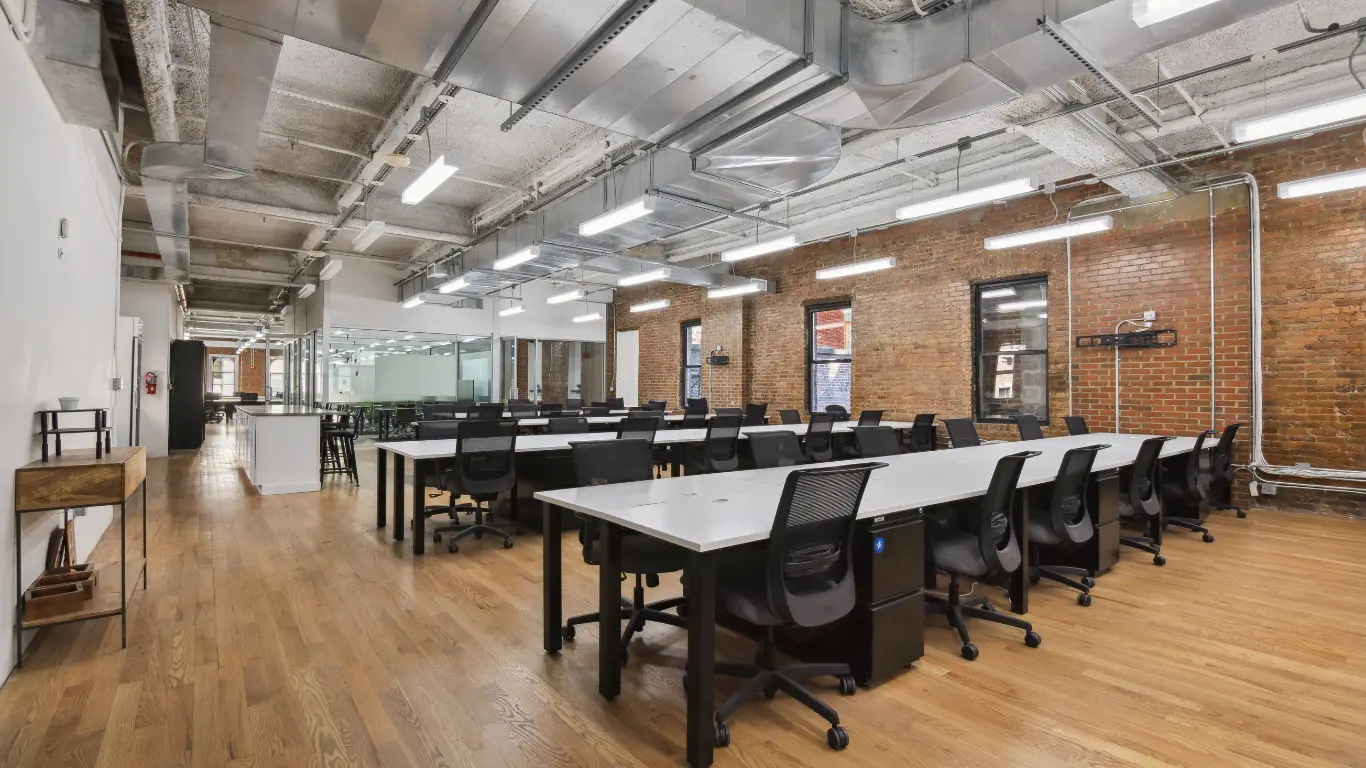
Finding the Right Team Office Space in Chelsea and Flatiron, Manhattan
 03.12.2026
You need an office space for your team in Manhattan that is conscious of your finances. Not a desk in a crowded room. Not a 10-year lease that locks you in. You need a real office that works for your business right now.
Chelsea and Flatiron offer exactly that. These neighborhoods give you flexible team offices with short-term commitments, ready-to-use setups, and everything your business needs to operate from day 1.
This guide shows you how to find the right space, what to expect in terms of cost, and why these two neighborhoods work so well for growing teams.
Why Chelsea and Flatiron Work for Manhattan Teams
These neighborhoods sit in the center of Manhattan’s business activity. You get access to multiple subway lines, thousands of restaurants, and a professional community that understands how modern businesses operate.
Transit Access That Actually Matters
Your team needs to get to work without drama. Chelsea and Flatiron deliver on this front.
Flatiron sits directly on major lines, including the N, Q, R, W, and 6 trains at Union Square and 23rd Street. The F and M trains serve the area along 6th Avenue. Chelsea offers access to the 1, 2, and 3 trains along 7th Avenue and the A, C, and E trains at 23rd Street and 14th Street. Your team members coming from Brooklyn, Queens, the Bronx, or New Jersey can reach these neighborhoods in under 45 minutes in most cases.
Penn Station sits just blocks north of Chelsea. Grand Central is a quick subway ride from Flatiron. This matters when you have clients visiting or team members commuting from outside the city.
The Business Community Around You
Chelsea attracts tech companies, digital agencies, and media firms. Flatiron pulls in startups, consulting groups, and creative studios.
You are not just renting a workspace. You are joining a neighborhood where other businesses face the same challenges you do. The coffee shops fill up with professionals working on laptops. The lunch spots host informal client meetings. The after-work bars become networking spots without the forced corporate feel.
This proximity creates opportunities. You meet potential partners, clients, and collaborators just by being in the area. Your team absorbs energy from being around other ambitious businesses.
How Much Space Does Your Team Actually Need?
Most teams get this wrong. They either cram too many people into a small room or pay for empty desks they never use.
Here is what works based on real usage patterns from Manhattan teams.
Space Requirements by Team Size
A team of 5 to 8 people needs about 600 to 800 square feet. This gives you dedicated desks, a small meeting area, and room for storage or a printer station.
A team of 10 to 15 people requires 1,000 to 1,400 square feet. You can fit individual workstations, a proper conference area, and a lounge space at this size.
A team of 20 to 30 people should look at 1,800 to 2,500 square feet. This allows for different work zones, private phone rooms, and collaborative areas that do not interrupt focused work.
These numbers reflect efficient, flexible team office layouts designed for modern work styles. Traditional office planning standards often allocate 150 to 225 square feet per employee, which includes circulation space, private offices, and less efficient configurations. The ranges above assume a traditional setup where everyone has an assigned desk. If you run a hybrid schedule, you can often reduce your required space by 25–40%, depending on how aggressively you share desks and manage attendance.

Layout Options That Support Different Work Styles
Open layouts work well for teams that collaborate constantly. Designers, developers, and creative groups often prefer this setup. Everyone can see what others are working on. Questions get answered quickly. Energy stays high.
Pod layouts divide the office into smaller sections. Each pod holds 3 to 5 people working on related projects. This works for agencies with multiple client teams or companies with distinct departments.
Private offices within a suite give managers or senior team members quiet space for calls and focused work while keeping everyone in the same location. Teams of 15 or more often need at least one or two private offices mixed into the layout.
Making Hybrid Work Actually Work
Many Manhattan teams now operate on hybrid schedules. Some people come in on Monday, Wednesday, and Friday. Others choose Tuesday and Thursday. Some only need the office for specific meetings or collaboration days.
This creates a problem where you’re paying for 15 desks, but only 8 people are showing up on most days. And then you find yourself in a scenario in which everyone arrives on Wednesday and you run out of space.
The solution is a flexible team office that allows desk sharing. You rent space for 10 workstations but have 15 team members. You schedule office days so occupancy stays at 60-70%. This can cut your real estate costs by 25-35% compared to traditional space, though actual savings vary based on your specific usage patterns and lease terms.
Chelsea and Flatiron offer many spaces designed specifically for this model. You get a private suite your team controls, but the desk count matches your actual daily occupancy instead of total headcount.
What You Get with All-Inclusive Team Office Space
Traditional office leases require you to handle everything separately. You sign the lease. Then you buy furniture and set up the internet. You then contract with a cleaning company. Then you figure out meeting room technology.
Team office space in Manhattan includes all of this from day one.
Move-In Ready Means Actually Ready
Your space comes fully furnished. Desks, chairs, filing cabinets, and reception furniture are already installed. You bring your laptops and start working.
The internet commonly runs at 500 Mbps or higher in many spaces, though specific speeds vary by provider and building infrastructure. Confirm the actual connection speed with each provider you consider. This matters when your team runs video calls, shares large files, or uses cloud-based software all day.
Meeting rooms include screens, video conferencing equipment, and whiteboards. You book a room through an app and show up ready to present.
Phone systems connect to your business number through VoIP. Your team can take calls from desk phones or through computer apps, and remote workers stay connected through the same system.
Shared Amenities You Actually Use
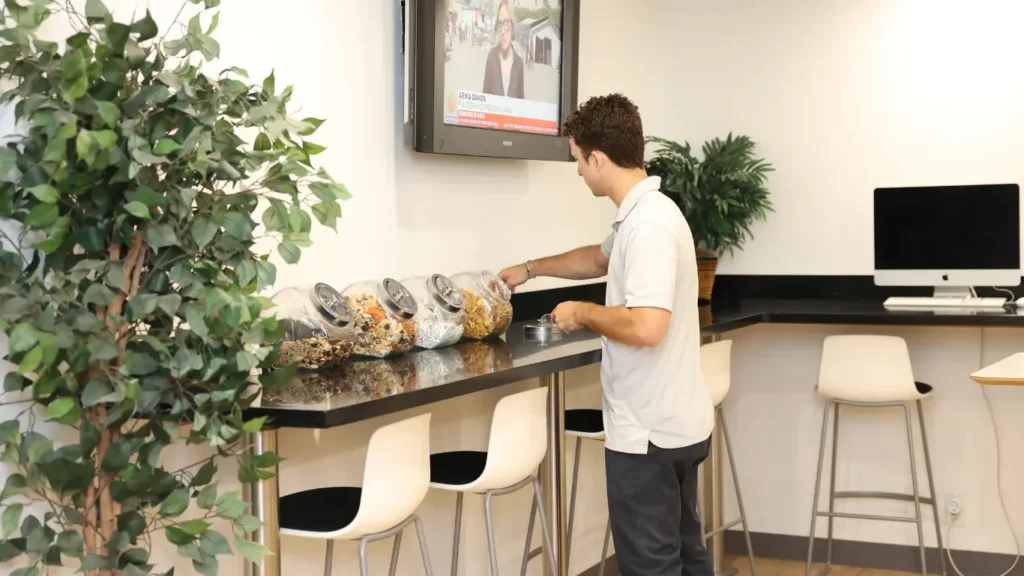
- Break rooms with coffee, tea, and snacks reduce the constant coffee runs that break up the workday.
- Reception services mean someone greets your clients when they arrive. This matters when you want to make a professional impression but want to save on a full-time receptionist.
- Mail and package handling saves time. Your deliveries get signed for and held securely. You pick them up when convenient instead of worrying about missed deliveries. In many buildings this service is included or available as a low‑cost add‑on.
- Common areas give your team places to work outside the office when they need a change of scenery. These spaces also become natural spots to meet people from other companies in the building.
- Conference rooms outside of your private workspace let you host larger client meetings or training sessions without cramming everyone into your office.
Month-to-Month Flexibility vs. Traditional Leases
Traditional Manhattan office leases require 3- to 10-year commitments. You negotiate terms, put down a security deposit of 3 to 6 months rent, and often need to personally guarantee the lease if you run a small company.
Team office space operates differently.
Short-Term Commitments That Match Business Reality
Many team offices in Chelsea and Flatiron offer month-to-month terms after an initial 3- to 6-month commitment. Some require 12 months upfront but still give you far more flexibility than a standard lease.
This matters when your business is growing, but you cannot predict exactly how fast. You start with space for 8 people and find yourself6 months later in need of a room for 12. With flexible workspaces, you can expand into a larger suite in the same building without breaking a lease or losing your deposit.
It also matters when business slows down. If you need to reduce costs quickly, you can downsize or exit without paying years of remaining rent.
The Real Cost Comparison
Team office space in Chelsea typically runs $800 to $1,400 per person per month whereasFlatiron runs slightly higher, usually $900 to $1,500 per person per month.*
This sounds expensive until you break down what traditional space actually costs.
A traditional lease might show $65 per square foot annually. For a 1,000 square foot office, that is $5,417 per month. But you also pay for furniture, internet, utilities, cleaning, maintenance, and reception separately. These costs add another $1,500 to $2,500 monthly. Your actual cost reaches $7,000 to $8,000 for space that holds 10 to 12 people. That is $583 to $800 per person before you even factor in the time spent managing all these services.
Team offices at a coworking space bundle everything together. You know exactly what you pay each month without surprise bills, o vendor management, o furniture shopping, and all your amenities & utilities covered.
When Traditional Leases Still Make Sense
If you know you will stay in the same location for 5 years and your team size will stay stable, traditional leases can cost less. Large companies with 50 or more employees often find better economics with standard office space.
But most growing businesses in Manhattan do not have that certainty. Your team might double in 18 months or you might shift to a different neighborhood. Who knows? You may even decide to go fully remote.
Flexibility has real value when you face that kind of uncertainty.
How to Choose the Right Team Office in Manhattan
You can tour 10 different spaces and still feel confused about which one works best. Here is how to make a clear decision.
Start with Location Requirements
Map where your team actually lives: If 70% of your people come from Brooklyn, choose a location near the F, M, N, Q, or R trains in Flatiron or the A, C, or E trains in Chelsea. If most commute from New Jersey, stay close to Penn Station in Chelsea.
Think about your clients: If you meet with Madison Avenue advertising firms regularly, Flatiron makes sense. If you work with West Side creative studios, Chelsea fits better.
Consider the neighborhood energy: Walk around at 10 AM on a Tuesday. Does it feel like a place your team would want to work every day? Grab lunch at a nearby spot. Check if the food options match what your team actually eats.

Calculate Your True Space Needs
Count how many people work in the office on your busiest day: Add 10% for growth over the next 6 months. That is your target desk count.
Decide if you need private offices: Teams with client calls happening all day usually need at least one quiet room.
Figure out meeting room needs: How many times per week does your whole team gather? How often do you host clients? Choose a space with enough built-in meeting capacity, or confirm you can book shared conference rooms easily.
Compare What Is Actually Included
Ask specific questions about internet speed: Confirm the exact bandwidth and whether it is dedicated or shared. 100 Mbps shared among 15 people creates problems. 500 Mbps dedicated to your suite works fine.
Check if printing and copying are included or charged separately: Some spaces offer complimentary printing whereas others charge $0.10 to $0.15 per page.
Understand the cleaning schedule: Daily cleaning maintains a professional space. Weekly cleaning means you need to manage daily tidiness yourself.
Confirm access hours: Some buildings restrict access to business hours. Others give you 24/7 entries. This matters if your team works early mornings or late nights.
Test the Contract Terms
Read the actual contract language around expansion and contraction: How much notice do you need to give? What fees apply when you change space? Can you add or remove desks mid-term?
Understand the cancellation policy: Some spaces require 30 days’ notice. Others want 90 days. This affects how quickly you can react to business changes.
Check if pricing is locked or subject to annual increases: Many team office agreements include 3-5% annual escalations.
Making Team Office Space Work for Your Business
The right office space supports your business goals instead of creating new problems to solve.
Set Up Your Space for Productivity
Assign desks based on work patterns, not hierarchy
Put people who collaborate frequently near each other. Give people who take lots of calls spots away from the main work area.
Create clear zones for different activities
Designate quiet areas for focused work. Set up collaboration zones where conversation is expected. Establish phone rooms where people can take calls without bothering others.
Stock the basics your team uses daily
Keep the kitchen area functional with coffee, tea, basic snacks, and proper supplies. A well-maintained break area reduces time wasted on coffee runs and keeps energy levels steady.
Build Office Culture in a Flexible Space
Establish core days when everyone comes in
Many Manhattan teams choose Tuesday through Thursday as anchor office days. This ensures the team actually sees each other regularly.
Use the office for activities that benefit from in-person interaction
Save brainstorming sessions, training, client presentations, and team building for office days. Let people work remotely for heads-down work that requires deep focus.
Take advantage of building amenities and neighborhood resources
Host team lunches at nearby restaurants. Use building event spaces for larger gatherings. Organize informal happy hours at local spots.
Track What Actually Works
Monitor how your team uses the space
Which days see the highest attendance? Which meeting rooms get booked most? Where do people choose to work when they have options?
Survey your team quarterly about what works and what does not
Their feedback tells you if you need more meeting space, different furniture, better technology, or a layout change.
Watch your actual costs against budget
Team office space should simplify your expenses, not create budget surprises. If costs keep creeping up through add-ons and overages, something needs to change.

Frequently Asked Questions About Team Office Space in NYC
Team office space in Chelsea runs between $800 and $1,400 per person monthly. Flatiron pricing sits slightly higher at $900 to $1,500 per person monthly. These rates include furniture, internet, utilities, cleaning, and access to shared amenities. Spaces closer to Madison Square Park or with premium finishes command the higher end of these ranges. Buildings a few blocks west or south typically offer better value. Your total monthly cost depends on team size and specific amenities you need. A 10-person team should budget $9,000 to $13,000 monthly for quality space in these neighborhoods.
A team office gives you a private suite your company controls. You have your own access door,your own space, and your team works together without sharing the room with other companies. As such, team offices work better when you need privacy for calls, handle confidential information, or want your team working side by side. Coworking space means you rent individual desks in a shared room alongside people from other businesses. Coworking works when you need flexibility for individual team members or want maximum networking opportunities. Most teams of 5 or more people choose private team offices over coworking once they factor in productivity and privacy needs.
Yes, many team office providers in Manhattan offer month-to-month terms after an initial commitment period. The initial period typically runs 3-6 months, though some spaces require 12 months upfront. After that, you can continue month-to-month with 30-90 days’ notice for changes. This flexibility often costs 10-20% more than signing a longer term, though the premium varies by operator and current market conditions. The trade-off makes sense for growing companies that need the ability to expand, contract, or relocate based on business conditions. Ask specifically about notice periods and any fees that apply when you modify or cancel your agreement.
Getting Started with Your Team Office Search
You now understand what team office space costs, how much room your team needs, and why Chelsea and Flatiron work well for Manhattan businesses.
The next steps are simple:
- Visit 3-5 spaces in person.
- Bring a team member or two with you.
- See how the space feels when you walk in.
- Picture your team working there every day.
Ask the tough questions about contracts, costs, and flexibility, and compare what each space includes and what costs extra.
The goal is to choose the space that matches your actual needs instead of the one with the fanciest lounge or the lowest advertised price. Your team will spend 8 hours a day there. The right fit matters more than saving $100 per month.
WorkBetter helps Manhattan teams find office space that supports growth without creating unnecessary complexity. We know these neighborhoods, we understand the real costs, and we give you straight answers about what works for businesses at your stage.
The right space gets out of your way and lets you focus on business. WorkBetter offers exactly that.
*These per‑person ranges are based on published rates for private offices and team suites from flexible workspace operators in Chelsea and Flatiron, along with recent Manhattan coworking pricing analyses.
Discover a Better Way to Work
If you are interested in learning more about WorkBetter or exploring our membership options, we invite you to book a tour of our space today
Book A Tour
Flexible, hospitality-inspired office space solutions for modern organizations.
Subscribe to receive interesting stories, professional insights, business tips, local profiles, and special offers delivered directly to your inbox.


